India's Teesta VI Tunnel Disaster: What Happened and Why It Matters

At least 20 workers are confirmed dead after a gas explosion and tunnel collapse at the Teesta Stage VI hydroelectric project in Sikkim, with rescue officials warning that the remaining trapped workers are unlikely to be found alive. The 500-megawatt facility, under construction for the state-owned National Hydroelectric Power Corporation (NHPC), is now the site of one of India's deadliest infrastructure accidents in recent years.
Rajiv Roka, director of the Sikkim State Disaster Management Authority, confirmed that 13 bodies had been recovered from the collapsed tunnel as of July 22, 2026. Rescuers have spotted an additional seven to eight bodies inside but cannot retrieve them because of hazardous conditions. Of the 25 workers initially trapped, the numbers account for the full group. Roka said plainly that given the conditions inside the tunnel, he does not think there could be any survivors Al Jazeera.
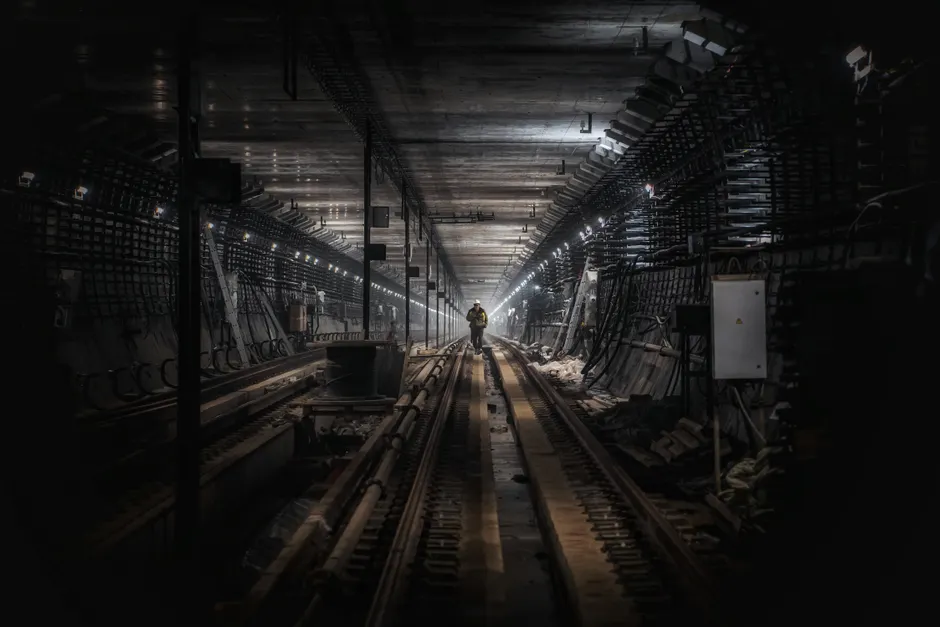
NHPC attributed the collapse to a sudden release of suspected methane gas trapped in the rock formations, which produced dense smoke and toxic gases. Survivors told authorities they heard a loud explosion before the tunnel gave way Courthouse News. Methane ingress — the seepage of naturally occurring gas into an enclosed space — is a recognized hazard in Himalayan tunnel projects. When methane, trapped in sedimentary rock layers, is suddenly released during excavation, it can reach explosive concentrations in the confined space of a tunnel within seconds. Think of it like opening a pressurized can of gas in a sealed room: the gas disperses fast, and any spark can ignite it.
Recovery efforts have been hampered by a combination of factors. Waterlogging in the tunnel and ongoing methane leakage from underground rock formations have made it unsafe for rescue teams to stay inside for long. Torrential monsoon rains in recent days further complicated the operation, swelling water levels and cutting off access to the remote site in northeastern India Al Jazeera. The convergence of monsoon flooding, toxic atmosphere, and structural instability means that each phase of body recovery requires gas-level monitoring and dewatering — pumping water out of the tunnel — before teams can re-enter.
The Teesta Stage VI project sits on the Teesta River and is part of India's broader push to expand hydropower capacity along the Himalayan corridor. NHPC is the central government's principal hydropower developer, and the 500 MW facility represents significant capital infrastructure for the region. The company has stated that a detailed investigation into the tunnel collapse will be conducted, though the focus remains on recovery operations Al Jazeera Time.
The broader context here is the recurring safety challenge of building hydropower in the Himalayas, where complex geology, high-altitude conditions, and monsoon disruption converge. Tunnel boring and blasting in young, folded Himalayan rock routinely encounters methane pockets, fault zones (fractures in the earth's crust), and aquifer intersections — places where underground water flows into excavation sites. The pending NHPC investigation will need to address whether pre-excavation geological surveys detected the methane-bearing rock layers, and whether ventilation protocols were adequate for the gas concentrations encountered. India's regulatory framework for tunnel construction safety mandates gas monitoring and ventilation systems, but enforcement at remote sites has long been a point of friction among industry engineers and occupational safety advocates.
The death toll may still rise. With seven to eight bodies visible but unrecoverable and no expectation of survivors, the final figure depends on whether conditions improve enough for teams to extract the remaining victims. Monsoon conditions in Sikkim typically persist through September, and the tunnel's structural integrity after the blast remains uncertain. NHPC's investigation, once recovery concludes, will likely examine both the immediate trigger and the systemic safety architecture governing one of India's most ambitious hydropower corridors.